Bulk export supply · FOB Qingdao · trial lots from 1 tonne
Home/Blended de-icer/HB-1 · low-temperature de-icing blend
Blended de-icer

HB-1 · low-temperature de-icing blend

The calcium-rich grade in the range. Formulated for surfaces that are already iced over rather than for preventing ice in the first place — courtyards, car parks, pavements, municipal roads during a freeze.

Get an FOB price See the specification
HB-1 · low-temperature de-icing blend
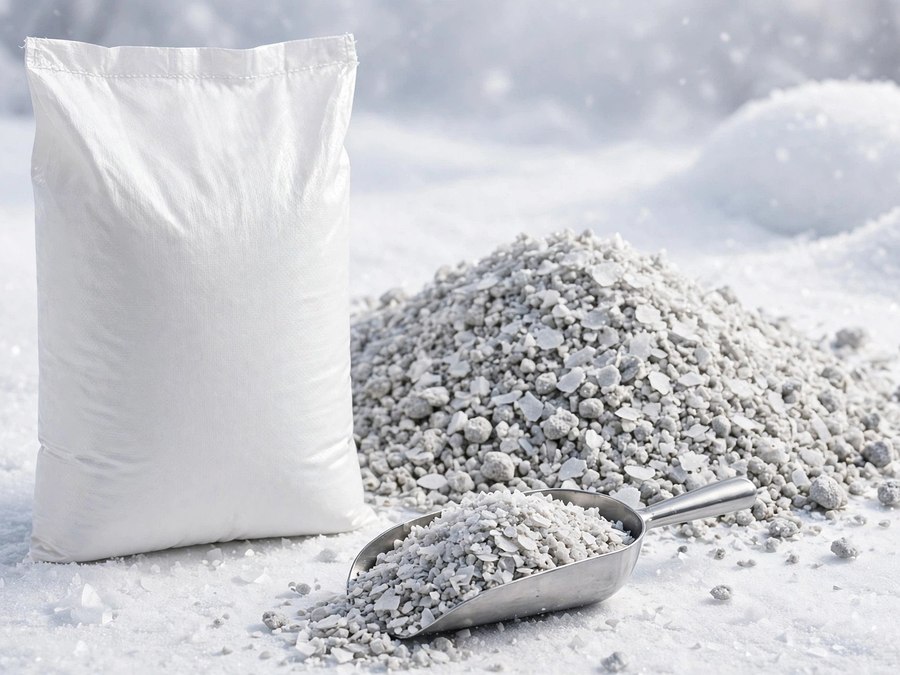
HB-1, 1–8 mm granular, in 25 kg bags

Specification

MgCl₂·6H₂O40%
CaCl₂·2H₂O55%
Corrosion inhibitor5%
Total100%
Particle size1–8 mm, granular
Application rate15–100 g/m²
Packing25 kg PP woven, PE or self-sealing bag; 1,000 kg jumbo bag on ISPM 15 pallet
LoadingApprox. 27 t per 20′ container
Minimum trial1 t
Incoterm / HSFOB Qingdao  |  28273100 · 28272000

Typical values. The figures for your shipment are stated on the batch certificate.

Why the calcium share is this high

Calcium chloride is the faster of the two chlorides once it is in contact with ice. Magnesium chloride carries further and is gentler on the surface. HB-1 puts the weight on calcium because the customers who buy it are dealing with ice that has already formed.

A municipal crew that pre-treats before a forecast event wants carry-over: salt that stays on the road and keeps working after the truck has gone past. A facilities team clearing a courtyard at seven in the morning wants the ice gone by the time staff arrive. Those are different products, and HB-1 is built for the second job.

The 5% corrosion inhibitor package is the third component and the one that shows up in the specification sheet. It is what allows the blend to be used on paved surfaces and around vehicles without the surface damage that plain rock salt leaves behind.
Where it is specified

Municipal roads

Secondary routes and town-centre streets during a freeze, where response time matters more than carry-over.

Courtyards and car parks

Surfaces that have to be walkable before the morning, with paving and vehicles close by.

Parks and golf courses

Where the surface underneath the ice is the asset being protected.

How the three grades compare

GradeMgCl₂·6H₂OCaCl₂·2H₂OInhibitorBest for
HB-140%55%5%Ice already formed; fast response
HB-280%15%5%Road networks; carry-over between passes
HB-395%—5%Bridges, steel and concrete at risk

Application rate across all three: 15–100 g/m², depending on air temperature and snow depth.

Get a price

Tell us the grade and the tonnage

We answer with an FOB Qingdao price for that one item — not a catalogue. Trial lots from one tonne, around 27 tonnes per 20′ container.

  • Reply within one working day
  • Batch figures stated before you order
  • Neutral packing or your own label

We use these details only to answer your inquiry. See our privacy notice.

Questions buyers ask

Why not just use rock salt?

Rock salt is cheaper per tonne and slower to act, and it leaves the surface damage that the 5% inhibitor in HB-1 is there to limit. For a car park or a courtyard the cost of the damage usually exceeds the difference in the price of the salt.

Can HB-1 be used for pre-treatment?

It is formulated for ice that has already formed. If you are pre-treating before a forecast event, HB-L liquid or a higher-magnesium granular grade is the better fit.

What rate should we apply?

15–100 g/m², varying with air temperature and snow depth. Your own crew will settle on a working rate quickly; the range covers what municipal specifications normally ask for.